

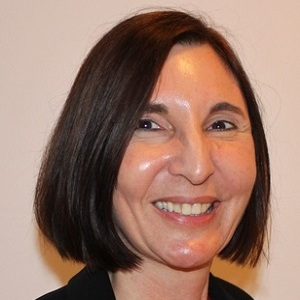
Dr. Dominique Galli’s 30-year career with Indiana University is coming to a close, effective May 31, 2026, when she retires. During her tenure, she has made significant contributions to the IU School of Dentistry (IUSD) and the campus community, most notably in research, leadership, and teaching. The impact of her career, however, may be best defined by her role as a trusted mentor and advisor, and the enduring influence of those she’s helped along the way.
Galli earned both an M.S. and Ph.D. in microbiology from Ludwig-Maximilians-University in Munich, Germany, and was completing a postdoctoral fellowship at the University of Texas Health Science Center in San Antonio in 1996 when her mentor was offered a faculty position at IUSD. Wanting to continue her research, she followed her mentor to Indianapolis, who soon after left higher education. This transition gave Galli the opportunity to conduct more independent research while also launching her teaching career, early steps that would shape her mentoring approach.
She successfully secured NIH grant funding and expanded her research portfolio, catching the attention of campus executive vice chancellor Dr. Uday Sukhatme, who named her his first faculty fellow. This role opened new doors for Galli, shifting her focus to campus operations and administration, including positions as assistant vice chancellor for research and executive director of the Center for Research and Learning. In 2020, she returned to her IUSD roots, where she still held the rank of associate professor and had recently been appointed director of biomedical sciences. Since then, she has spent more time in the classroom teaching and guiding students directly.
Though her career evolved, mentoring and advising emerged as her central, unifying professional purpose.
“People in my lab, new researchers, my academic appointment staff, new faculty, campus colleagues, undergraduate students—mentoring is the theme I’ve had throughout my academic career,” Galli said. “I’ve been part of the mentoring dialogues on campus through the graduate school. I’ve facilitated several mentoring workshops, and I was part of the campus mentoring academy.”
For Galli, impacting others through mentoring has been the most fulfilling aspect of her work in higher education. Early in her career, her approach was more scientific; she credits Uday Sukhatme with helping her to develop a more human-centered problem-solving focus, allowing her to merge these skillsets for the benefit of others.
“I enjoy helping others be successful in what they do,” Galli said, “sharing expertise and experience, then watching them learn, overcome challenges, and achieve success. Knowing that I can make an impact and help solve problems, as well as care about people and their success, is what motivates me. If they pass on what they learn from me, it becomes a snowball effect—the knowledge continues to carry forward, and that is rewarding.”
Recently, Galli established an undergraduate research award on campus—the Galli-Shelton Excellence in Undergraduate Research Award—named in memory of one of her former staff members. While Sukhatme was the most influential person in her overall career, she also credits several IUSD faculty members for supporting her along the way: Drs. Eric Everett, Larry Garetto, Rich Gregory, James Hartsfield, and the late Chris Miller.
“I’ve worked with so many wonderful colleagues, both staff and faculty,” she said. “Many came and went over time, but they are and were great colleagues. I will miss them. I’ll also miss the students—interacting with them and helping guide them.”
Galli looks forward to the freedom retirement will bring, no longer feeling as though her life is controlled by a calendar. She plans to tackle projects around her home and is eager to spend more time hiking, biking, traveling, and camping. She also hopes to pick up pickleball and reignite her passion for migratory bird photography.
“I hope the people I’ve impacted will be my legacy,” she added. “After learning from me, I hope they will be there for others and pay it forward. The impact continues to grow over time. Names may be forgotten, but the impact lives on.”